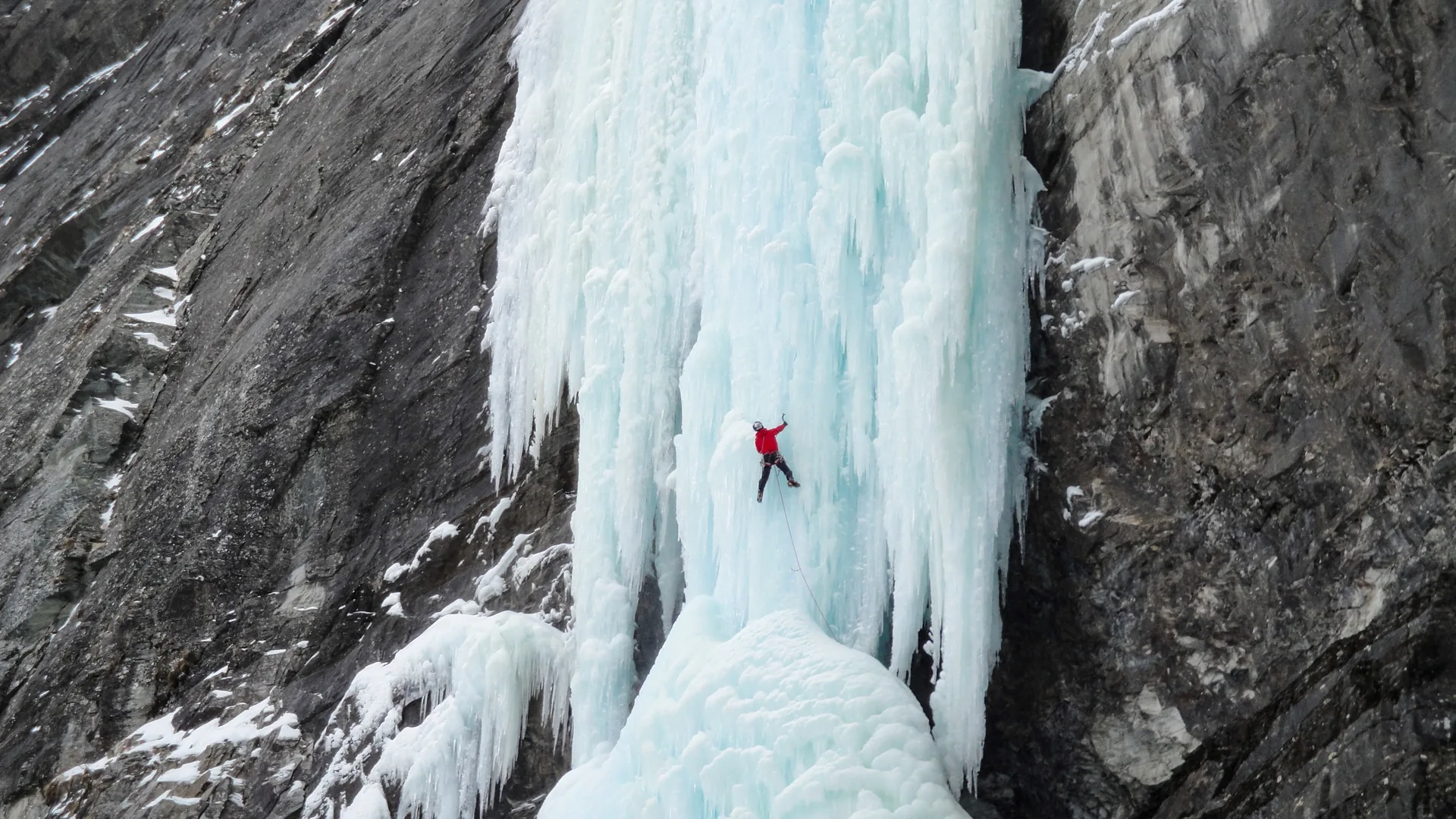
A climber in a red jacket ascending a tall blue icefall between dark rock walls
General ice conditions

Ice climbing safety
in Rjukan.

Rjukan is one of Europe’s best-known ice climbing destinations, with easy access and a wide range of routes, including many suitable for beginners.

Hydropower operations can affect climbing areas, so check local hazards and water-release information before you climb. If you lack experience, use a qualified guide or ice climbing instructor.

General ice conditions.

An overview of ice formation and conditions around Rjukan. Field observations below cover specific routes and approaches.

Early ice formation

Observed

Last updated: · Norway time

Coverage: Gaustatoppfossen, some other higher-elevation areas, and Krokan (snow cover).

Following several days of cold weather, ice has started to form on Gaustatoppfossen and in some other higher-elevation areas.

Snow cover remains limited, with approximately 10–15 cm reported at Krokan. At the time of this report, further cold weather was expected.

Reported by Rjukan Adventure

This overview does not confirm conditions on individual routes. Read the local hazard notes before planning your climb.

Hazards to check before you climb.

Read the local hazard notes for your planned climb and approach.

Avalanche risk

Consider avalanche exposure above the climb and along your approach. Check the terrain and local warnings for your planned area.

What to check

Consider the slopes above the climb and the approach, including where an avalanche could run out. Check the forecast coverage and local observations for your planned area.

Relevant observations: recent avalanches, new snow and wind-transported snow, with location and time.

Water releases & sudden rises

Water releases can rapidly change river flow in the canyon. A low water level is not an all-clear.

What to check

Hydropower releases can rapidly change river flow and water levels. Check local operator information, posted warnings and restrictions before entering the canyon.

Local notes identify water-release exposure. Live water levels and operator-confirmed release information are not available here. A low water level is not an all-clear.

Snow & approach conditions

Check snow and ice on the walk in and the way out. Travel conditions do not tell you whether avalanche terrain is safe.

What to check

Look for dated reports of snow depth, crust, deep drifts and icy ground on the approach and descent. These observations describe travel conditions, not avalanche safety.

Snow maps provide broader context. They do not verify the condition of an individual trail.

Field observations.

Dated reports from specific places. These are observations, never recommendations to climb.

No field observations published yet.

Reports will appear here with their observation date, source and limitations.

About icebeta.

Icebeta is an initiative by Rjukan Adventure, a local guiding company, and Spak Events AS. We share local knowledge to help climbers understand the hazards around Rjukan.

Notices and observations are updated manually. Coverage is incomplete, and conditions can change after publication. Photos show the terrain and routes, not current conditions; illustrative images are labelled.

Explore the hazard areas